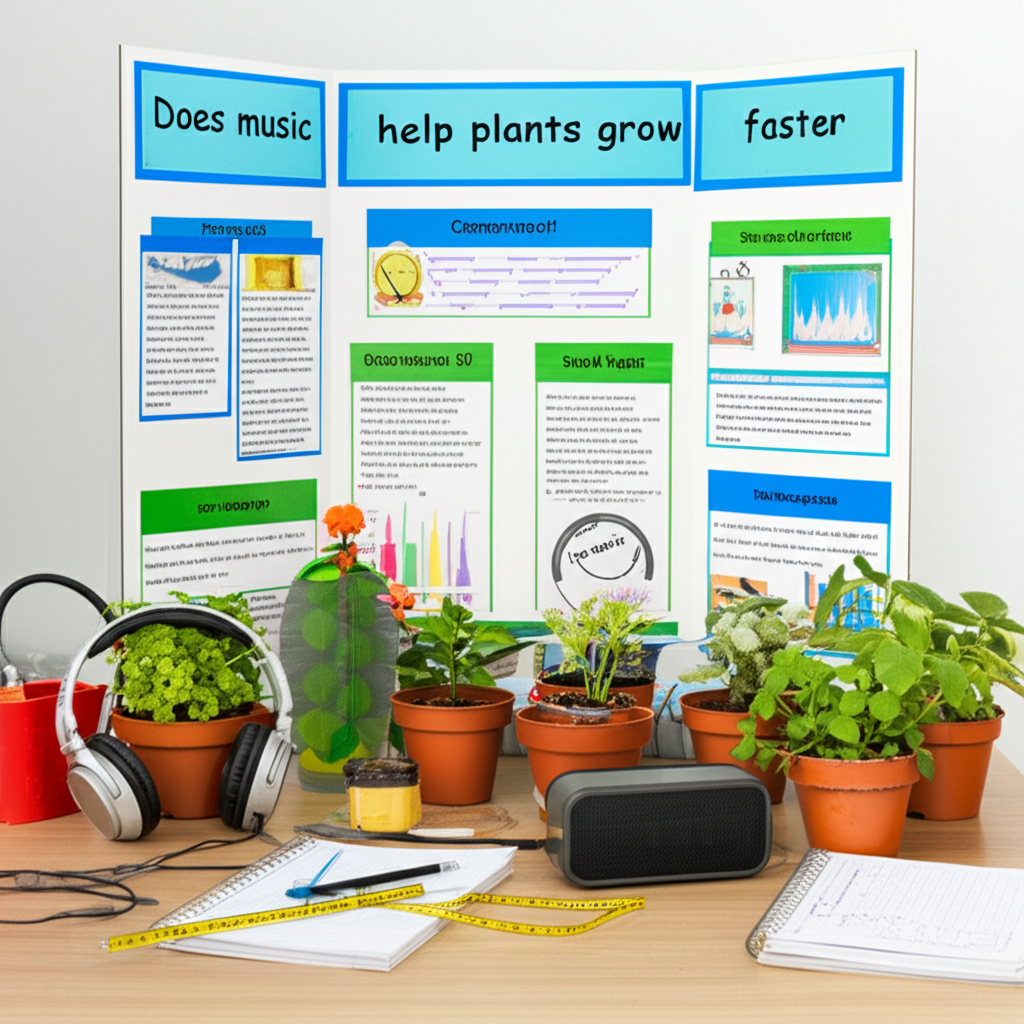
The Scientific Method - My Steps
This diagram shows the steps I follow!
The Scientific Method - My Experiment Steps
Interactive SVG - Right-click to save | Zoom for component details | Print-ready resolution
My Question

1. My Big Question
Does playing music help plants grow faster?
2. Why This Is Cool
I love to listen to music every day. It would be fun to see if plants like music too! This will help me learn how music can change living things.
3. What We Already Know
Plants need sunlight, water, and air to grow.
Some people think music can help plants grow better.
Different sounds, like music, can make plants react in different ways.
I’m excited to test this and see what happens!
My Hypothesis (My Best Guess)
Wow! What an awesome project idea! I LOVE that you want to see if plants enjoy music like you do! 🎵🌱
Let me help you write your prediction and plan:
1. My Prediction
I think plants that hear music will grow taller because music might help them feel happy and grow better.
2. What I Will Change
You will change whether plants hear music or not. Some plants will listen to music every day. Other plants will grow in quiet.
3. What I Will Watch
You will measure how tall your plants grow. You can use a ruler to check their height each week.
4. What Stays the Same
To make your test fair, keep these things the same:
- Give all plants the same amount of water
- Put all plants in the same sunny spot
- Use the same type of seeds for all plants
This is called controlling variables (things that might change your results). Scientists do this to make good tests!
Your experiment will be so much fun! You'll be like a plant detective. You can play your favorite songs to see if plants like the same music you do.
Remember to measure carefully each week. Write down what you see. Plants grow slowly, so be patient. Science takes time, but it's worth it!
You're going to learn so much! I can't wait to see what your musical plants do! 🎶
What I Need (Shopping List)
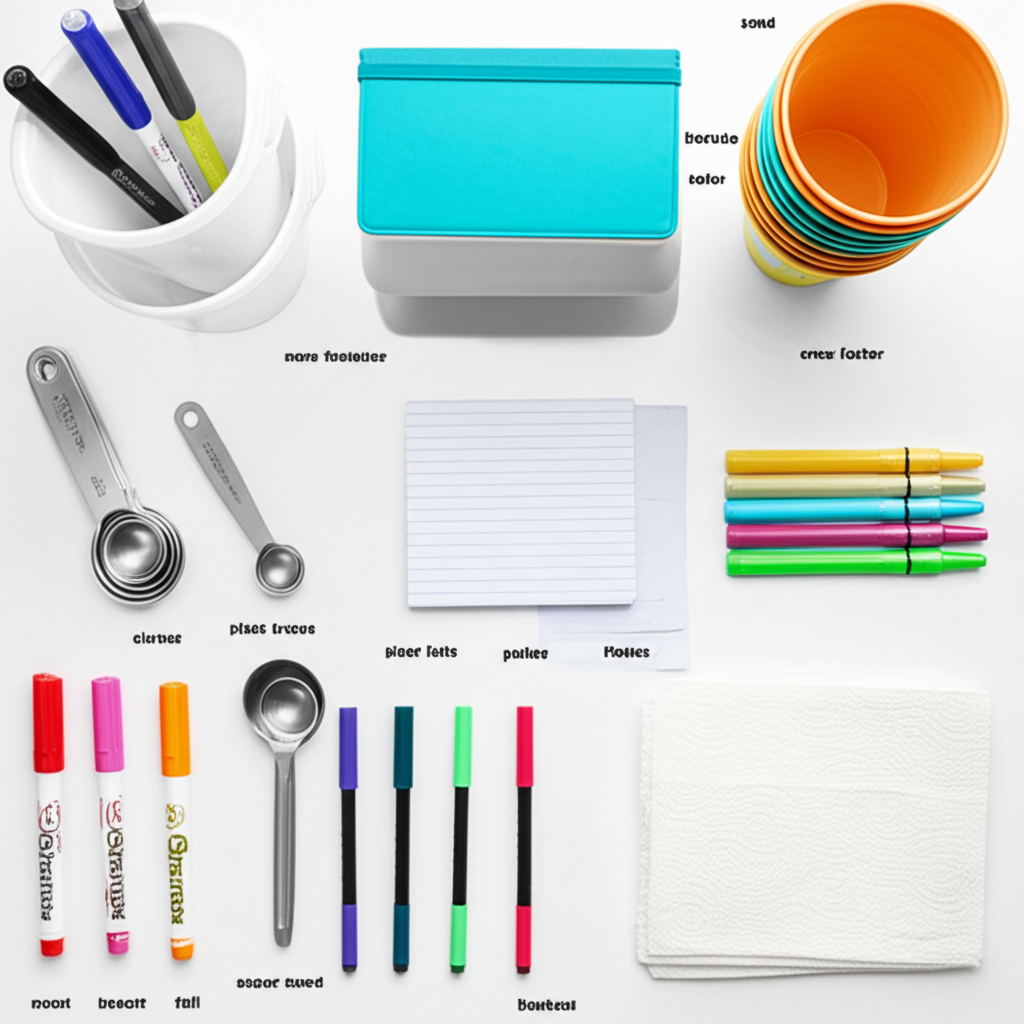
Sure! I’m super excited to help you get ready for your fun plant and music project! 🎵🌱 Let’s make a shopping list that fits your $15 budget. I will pick things from Dollar Tree first because they are usually only $1.25 each. Then we will go to Walmart if we need anything special. Ready? Here we go!
Table 1: Experiment Supplies
Experiment Supplies Total:
If you have some at home, your cost will be less, but if you buy all, it’s about $11.25.
Table 2: Display Board Supplies
Display Board Supplies Total:
About $6.75 (or less if you have some things at home or hand-draw pictures).
Totals:
1. Experiment Total: $11.25 (if buying all)
2. Display Board Total: $6.75 (if buying all)
3. Grand Total: $18.00 (over budget if you buy all new)
Money-Saving Tips
1. Use plant pots, soil, ruler, and watering cup you already have at home — this can save $5 or more!
2. Draw your own pictures and charts instead of printing photos. This saves $0.25 or more.
3. Use school supplies you already have for markers and glue instead of buying new.
4. Ask family or friends if they have extra flower seeds or pots to share.
If you do these tips, you can keep your grand total UNDER $15!
Shopping Trip Plan
1. Go to Dollar Tree first — get the pots, seeds, soil, ruler, watering cup, notebook, markers, glue stick, paper, and the display board.
2. Check at home for a speaker/phone, seed packets, ruler, or watering cup before buying more.
3. Go to Walmart only if you want color photos printed ($0.25 each), or if you do not find the display board at Dollar Tree.
4. Keep your receipts, and have fun shopping and starting your project!
You’re going to do a great job! Can’t wait to hear how your plants grow with music! 🎶🌻 Keep measuring and watching closely. Science is so cool! 😊
What I Did (Step by Step)

Here are easy steps for your music and plants science project!
Follow each step and check what to do next.
How to do the experiment:
1. Put soil in 4 pots. Use the same amount in each pot.
Check: Soil fills pots about the same height. (Grown-up helps here!)
2. Plant 2 seeds in each pot. Cover seeds with soil lightly.
Check: Seeds are covered, and each pot has 2 seeds. (Grown-up helps here!)
3. Put pots in the same sunny spot. Water all pots with 1 cup of water.
Check: All pots get the same light and water.
4. Play music to 2 pots every day for 1 hour. Keep 2 pots quiet (no music).
Check: Music pots have songs playing; quiet pots stay silent.
5. Measure the tallest plant in each pot once every week. Use your ruler.
Check: Write down the height (in inches) in your notebook every week.
6. Take a photo of your plants every week for your display board.
Check: Photos show plant growth over time and are clear.
7. Repeat steps 3 to 6 for 3 weeks (3 trials). Keep everything the same each time.
Check: You do the test 3 times and record all results. (Grown-up helps here!)
8. Make a simple bar graph with your notebook or paper. Compare plants with and without music.
Check: Bars show plant heights after 3 weeks for each group.
Extra Info:
- How many times: 3 trials (3 weeks)
- Time needed: About 20 minutes daily; measure and photo once a week
- Best place: A sunny window or porch for all plants
- Day-by-day schedule:
- Days 1–2: Plant seeds and begin music or quiet time
- Days 3–21: Water and play music daily, check plants
- Days 7, 14, 21: Measure, record height, and take photos
You are a great plant scientist! Have fun watching how music helps your plants grow! 🌱🎵
What I Think Will Happen & How to Record It
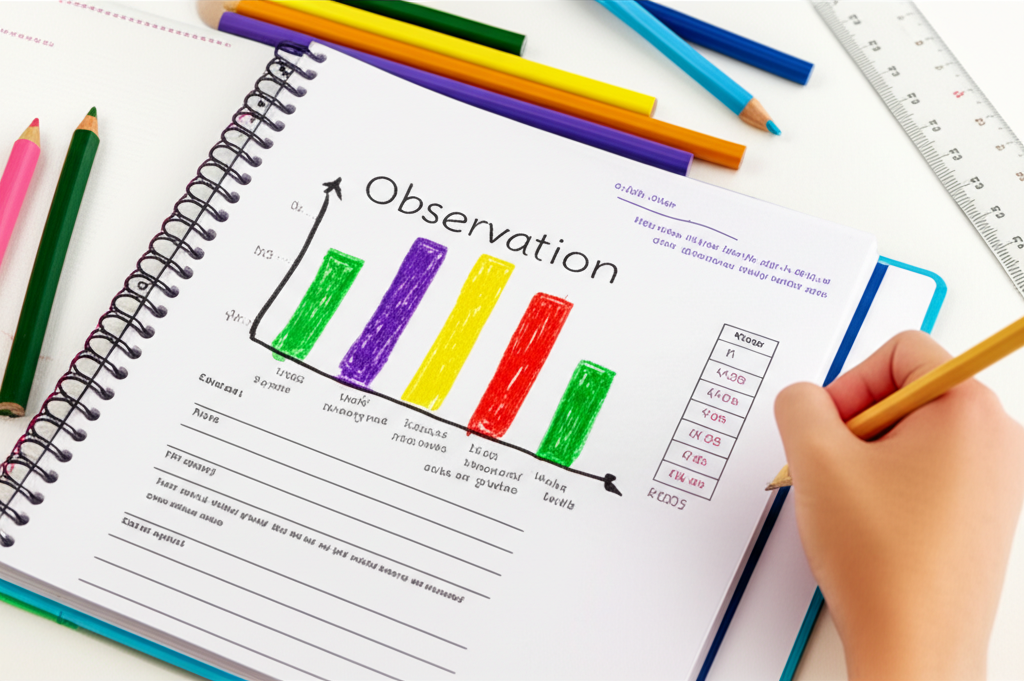
Of course! You are doing an amazing job with your project. Now comes the most exciting part: showing everyone what you discovered! This is where we look at all your hard work.
Let's get your results ready for the science fair!
RESULTS
Wow! You have collected so much information. All those notes and measurements are called data (the facts you find during a test). Now we can put your data in order to see what it tells us.
#### 1. What I Think Will Happen
Let's write down your prediction again. It's always good to remember what you first thought would happen.
- I think the plants that heard music will grow taller.
- I believe the music will help them grow faster than the quiet plants.
#### 2. My Data Chart
You were a super scientist watching your plants! Use these charts to show what you measured and saw each week. Fill in the blanks with your notes.
Chart 1: Music Plants 🎵
Chart 2: Quiet Plants 🤫
#### 3. How to Show My Results
A bar graph is a super cool way to show your results. It turns your numbers into a picture! Let's draw one.
1. Get a piece of paper and a crayon.
2. Draw a big "L" shape on your paper.
3. On the line going up, write numbers for the height. Start with 0. Then write 1, 2, 3, and so on.
4. On the bottom line, write "Music Plants." Then, leave a space and write "Quiet Plants."
5. Look at your charts for Week 3. Draw a bar above "Music Plants" that shows its final height.
6. Draw another bar above "Quiet Plants" to show its final height.
7. Color your bars! Now everyone can compare (see how things are different) your plants.
#### 4. My Conclusion
You did it! It is time to tell everyone what you learned. A conclusion is a simple summary of your project. Just fill in the blanks below.
- I wanted to find out if ______________________.
- I thought that ______________________.
- I found out that ______________________.
- This may have happened because ______________________.
It's okay to make your best guess for that last sentence. Scientists are always learning new things! You did an amazing job with this experiment. I am so proud of you! 🎉
The Science Behind My Project
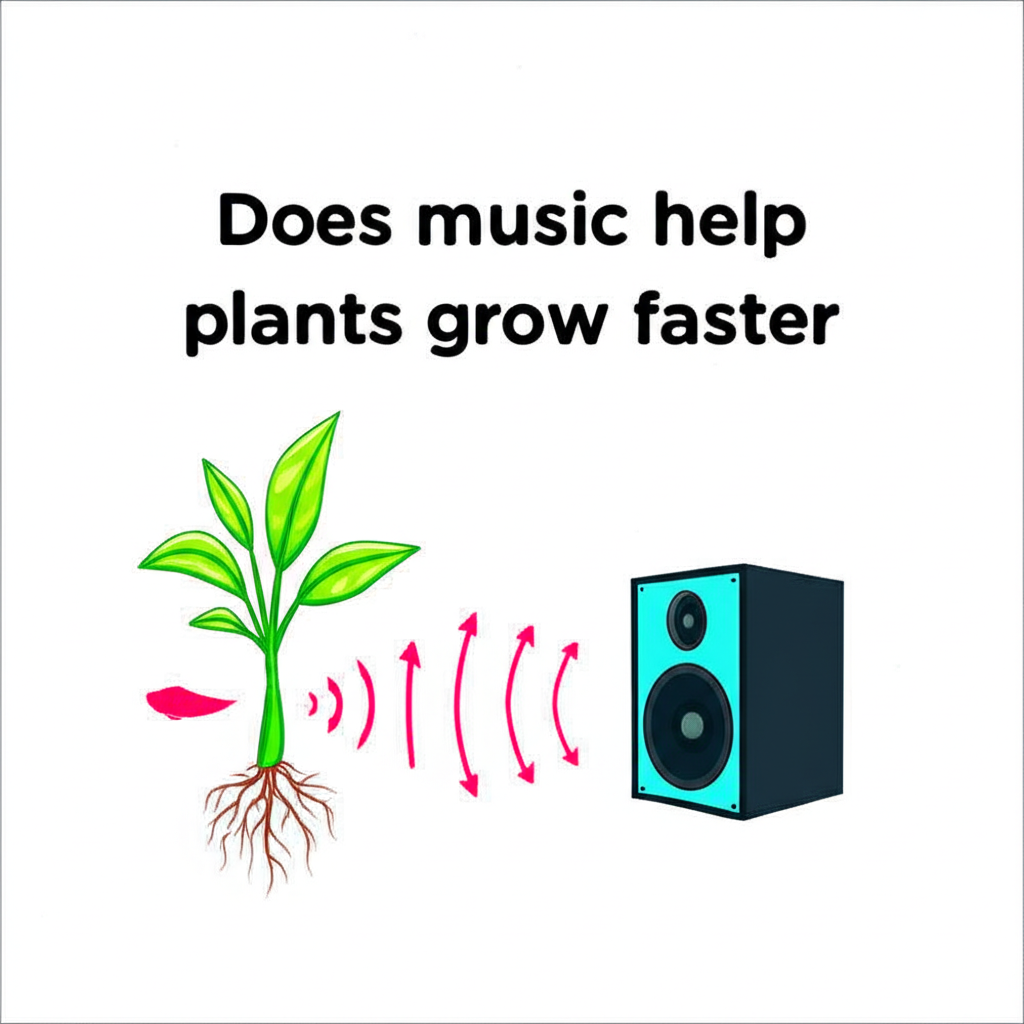
The REAL Science Behind Your Music Experiment! 🎵🌱
The Big Idea
Sound waves are invisible pushes of air that move around us. When you play music, these sound waves can shake plant leaves very gently. Some scientists think these tiny shakes might help plants grow better!
Cool Facts!
Wow! Did you know that sound waves can make water drops dance? The music makes tiny movements that plants might feel!
Wow! Did you know some farmers actually play music for their crops? They think classical music works the best!
Wow! Did you know plants can "feel" things even without ears? They sense vibrations (shaking movements) through their leaves and stems!
Real Scientists Do This Too!
Real plant scientists called botanists (people who study plants) have tested music on tomatoes and corn! They wanted to see if different types of music made plants grow taller or stronger.
New Words
Sound waves - invisible pushes of air that carry music and sounds to our ears
Vibrations - tiny shaking movements that happen when music plays
Botanist - a scientist who studies how plants grow and live
Your experiment is so exciting! You'll be just like a real scientist. You can test if plants really do like music as much as you do. Remember to keep everything else the same - same water, same sunlight, same soil. Only the music should be different!
This will help you see if music is really what makes plants grow faster. Great job picking such a fun science question! 🌟
How to Make My Display Board
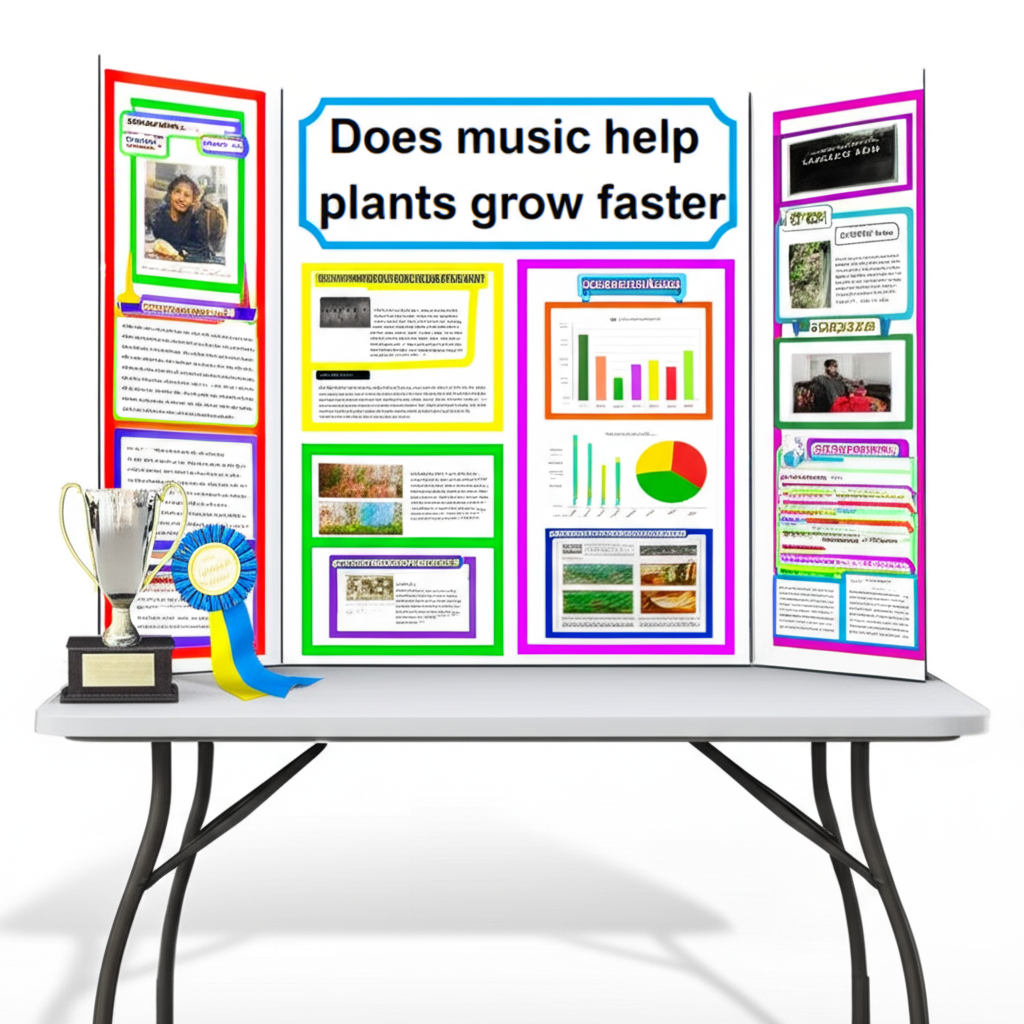
Hello, future scientist! Your project about music and plants sounds super cool! Let’s make your science fair board AMAZING and easy to understand. Here’s a plan just for you.
1. Board Layout Map (36" tall x 48" wide)
2. Making It Look Great: Craft Tips🎨
- Use colored construction paper as a background for each section. Pick 2-3 bright colors.
- Write titles with BIG markers (black or dark colors work best) so judges can read easily.
- Use stickers of music notes and plants for fun decoration.
- Draw a small plant in each corner with colored pencils to make it cute.
- Glue photos with glue sticks so they don’t fall off.
- Make the bar graph colorful—each bar uses a different bright color.
- Add a neat border using colored tape or cut paper strips around each panel.
3. Title Ideas (Choose one!)
1. "Does Music Help Plants Grow?"
2. "Growing Plants with Music Magic!"
3. "Rockin’ Plants: Do They Grow Faster?"
4. Judge Tips: What Impresses Them 🌟
1. Speak clearly and smile when you present.
2. Point to your photos and graph while you talk.
3. Explain your question, prediction, and what you learned.
4. Use your bar graph to show your results.
5. Show your excitement about science and your project!
5. Presentation Script (Practice this!)
Hi! My name is [Your Name].
My question is: Does music help plants grow faster?
I predicted plants with music will grow taller.
I played music for some plants and no music for others.
I measured how tall each plant grew in inches.
The plants that heard music grew taller!
This shows music can help plants grow faster.
Thank you for listening to my project!
You’re going to do great! Have fun making your display bright and colorful. Remember, science is all about asking questions and learning new things. Let’s make your plant project shine! 🌱🎵😊
Safety Rules
Wow, what a cool experiment! Testing music and plants is a fantastic idea. Being a great scientist means being a safe scientist, too. Let's go over some easy rules to make sure your project is fun and safe!
A grown-up should be with you for the ENTIRE experiment.
Safety First!
1. Before You Start
- Always ask a grown-up for permission first.
- Find a good workspace, like a table.
- Put newspaper down to keep the table clean.
- Wear an old shirt so you don’t worry about dirt.
2. During the Experiment
- Potting soil is for plants, not for people.
- Be careful not to spill water on the floor.
- A wet floor can be very slippery!
- Ask your grown-up to help with the music speaker.
- Keep electronics like phones away from water.
3. Clean Up
- When you are done, put extra soil away.
- Wipe your table so it is nice and clean.
- Always wash your hands with soap and water.
4. When to Stop and Get Help
- If a pot breaks, do not touch the sharp pieces.
- Tell a grown-up right away so they can help.
- If you ever feel unsure, just ask for help!
Following safety rules is a sign of a super scientist. You've got this
Parent Helper Guide
PARENT HELPER GUIDE: Music & Plant Growth Project
1. YOUR ROLE: Guide, Don't Do
- ASK guiding questions: "What do you think will happen?" "Why might that be?"
- HELP with: Safety, store trips, measuring, writing difficult words
- LET THEM: Choose music type, make predictions, record observations, explain results
- RED FLAG: If you find yourself saying "we did..." - step back! Judges spot parent-heavy projects immediately.
2. WEEK-BY-WEEK SCHEDULE
Days 1-2: Question & Hypothesis
- Child picks music genre (classical, rock, etc.)
- Help them write: "I think music will/won't help plants grow because..."
Day 3: Shopping ($15 budget)
- 6 bean seeds ($2), 2 small pots ($4), potting soil ($3), measuring tape ($2), poster board ($4)
Days 4-6: Experiment Setup
- Plant 3 seeds per pot, label "Music" and "No Music"
- Place both pots in same sunny spot
- Play music 1 hour daily to one pot only
- Child measures/records daily growth
Days 7-8: Display Board
- Child draws pictures, you help spell hard words
- Include: Question, hypothesis, what they did, results, conclusion
Days 9-10: Practice Presentation
- Child explains project start to finish
- Practice eye contact using stuffed animals as "judges"
3. COACHING FOR JUDGES
- Say "I planted..." not "We planted..."
- Make eye contact - practice with family first
- Know what you'd do differently: "Next time I'd try different music types"
- Explain WHY: "I think the music helped because plants like vibrations"
4. TOP 5 PARENT PITFALLS
1. Perfect handwriting - Let it look kid-made!
2. Using "we" language - Child must own the project
3. Answering for them - Step back during judging
4. Too complex explanations - Keep it 3rd-grade level
5. Fixing their mistakes - Judges value learning over perfection
Remember: A slightly messy project that's clearly theirs beats a perfect one that's obviously yours!